
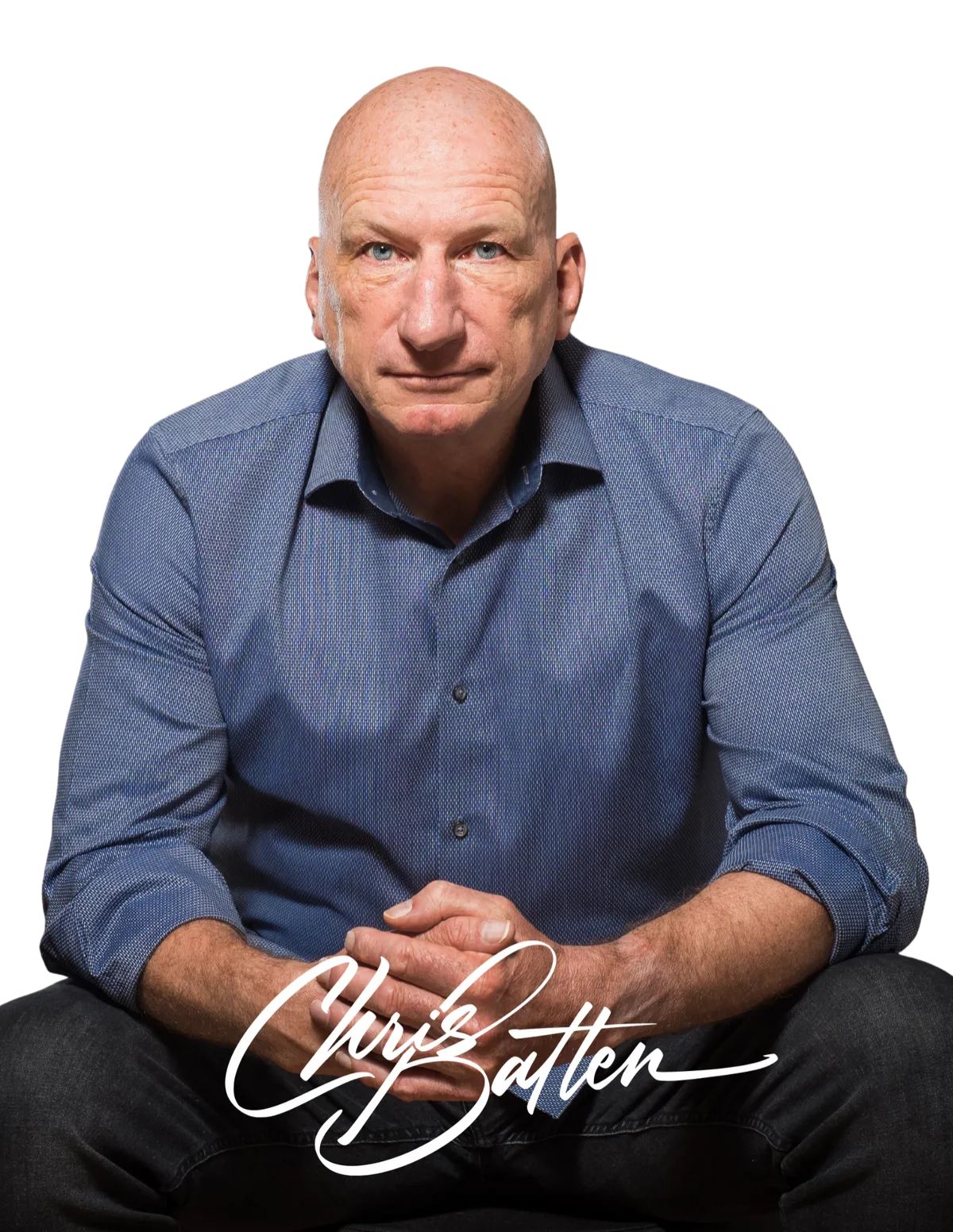
My Story
I DIDN’T LEARN EVERYTHING I KNOW FROM A BOOK.
I learned it through challenge, responsibility, failure, reinvention and the experience of building things that mattered.
My writing draws on a life spent leading people, building businesses, overcoming setbacks and discovering that we are often capable of far more than we recognise.
I WAS NEVER THE OBVIOUS PERSON TO BECOME A WRITER.
For much of my early life, words seemed to belong more naturally to other people.
I lived with undiagnosed dyslexia at a time when it was more likely to be interpreted as a lack of ability than a different way of processing the world. Education did not reveal what I might become. If anything, it left me with reasons to doubt it.
I attended boarding school from the age of seven and left both school and home at sixteen. There was no carefully prepared career plan, no obvious academic path and certainly no expectation that I would one day become an author.
What I did have was a growing determination to prove, to myself as much as anyone else, that the circumstances in which we begin do not have to determine where we finish.
That belief would be tested repeatedly: in the Army, in leadership, in business, through success and failure, and in moments when starting again was the only option available.
It would also become one of the central ideas running through everything I now write:
We are often capable of far more than we have been led to believe.
THE ARMY SHOWED ME WHAT PEOPLE ARE CAPABLE OF.
The Army gave me something my earlier education had not: structure, responsibility and the opportunity to discover what I could do.
It taught me that the labels we acquire early in life are not always accurate—and they certainly do not have to be permanent. Capability is not always immediately visible. Sometimes it only emerges when a person is given a meaningful challenge, clear expectations and the opportunity to rise to them.
I trained as a marksman and sniper. That required far more than the ability to hit a target. It demanded patience, preparation, judgement and the ability to remain composed when the pressure increased.
I learned that performing under pressure is rarely about a sudden act of brilliance. It is usually the result of mastering the fundamentals, preparing properly and trusting what you have practised when the moment arrives. Those lessons became very real during six active-service tours.
Difficult circumstances reveal a great deal about people, but they do not always reveal what we expect. The quietest person can demonstrate extraordinary courage. Someone who doubts themselves can become the person others depend upon. A group of individuals can achieve something remarkable when they understand the purpose, trust one another and accept responsibility for the outcome.
As my career progressed and I took command, I began to understand leadership differently. It was not about rank, volume or having all the answers. It was about creating clarity when circumstances were uncertain, making decisions when they could not be avoided and accepting responsibility for what happened next.
It also meant recognising the potential in people who might not yet recognise it in themselves.
The Army did not teach me that difficulty leaves us unaffected. It taught me that resilience is what we do after we have been affected: how we regain our footing, adapt to what has changed and find the belief to take the next necessary step.
Those experiences shaped the way I would later approach leadership, business and adversity. They also reinforced something that has remained central to my writing ever since:
Most people possess more ability, resilience and potential than their circumstances—or their own self-doubt—allow them to see.
BUSINESS TESTED ME DIFFERENTLY
Leaving the Army meant entering a world in which the structure was less obvious, the objectives were not always shared and leadership did not come with a uniform.
I had to learn again.
Over time, I built a successful career in business, eventually leading companies on both sides of the Atlantic. I helped create a business generating more than £1 million a month in new sales. From the outside, it looked like success—and in many ways it was.
But success does not remove difficulty. Sometimes it simply changes its shape.
As the business grew, internal relationships deteriorated. Trust broke down, competing interests emerged and something we had worked hard to build was placed at risk. I found myself fighting to protect the company, its people and its future, including seeking protection through the High Court.
Eventually, I sold the business to a competitor.
I made sure the people who had remained loyal were protected, that their jobs were secure and that they shared in what we had created. That mattered more to me than walking away with the appearance of having won.
The experience forced me to examine success, leadership and ego far more honestly.
I had made mistakes. There were decisions I would approach differently with the benefit of hindsight. But I also discovered that leadership is revealed most clearly when the comfortable choices have disappeared.
Building a successful business taught me what determination, clarity and collective effort can achieve. Almost losing it taught me something deeper: achievement matters, but not more than people, principles or the person you become while pursuing it.
Success showed me what I could build. Adversity showed me who I wanted to be.
WRITING BECAME HOW I MADE SENSE OF IT ALL.
Writing gave me a way to step back from experience and ask better questions.
What had worked? What had failed? What had I misunderstood? Which lessons might be useful to someone facing a similar decision, difficulty or moment of doubt?
My first book, Mind the Gap, was published in 2007. It was followed by books including Sales Alchemy, Making Rain and The Seven C’s of Why. Some explored business, sales and marketing. Others moved closer to the questions that had followed me throughout my life: what shapes us, what holds us back and what allows people to recover, develop and become more than they once believed possible.
The subjects may appear different, but the underlying thread is the same.
The way we think influences what we notice. What we notice affects the decisions we make. Those decisions shape the actions we take—and, eventually, the lives and businesses we build.
I do not write from the position of someone who has always had the right answer. I write as someone who has succeeded, struggled, made mistakes, started again and continued trying to understand what those experiences can teach us.
For someone who once believed that words belonged more naturally to other people, writing has become one of the most important ways I can make a difference.
I write to turn lived experience into useful ideas—and useful ideas into meaningful action.
WHAT I BELIEVE NOW.
After everything I have experienced, three beliefs continue to shape my work.
YOUR BEGINNING DOES NOT DETERMINE YOUR FINISH.
The circumstances in which we start may influence us, but they do not have to define the limits of what we become.
WE ARE OFTEN CAPABLE OF MORE THAN WE RECOGNISE.
Ability does not always arrive fully formed or announce itself with confidence. Sometimes it emerges through responsibility, adversity and the decision to keep moving.
THINKING BECOMES VALUABLE WHEN IT CHANGES WHAT WE DO.
An idea should give us more than a moment of inspiration. It should help us see something differently, make a better decision or take the next useful step.
THIS IS THE WORK I NOW CHOOSE TO BUILD.
At this stage of my life, I am less interested in building something merely bigger. I want to build something useful, something that can continue helping people long after the original words were written.
That is why my focus is now on books, practical learning and ideas that help people think differently about themselves, their work and what they might still create.
Some readers will come looking for clearer business thinking. Others will be rebuilding after a setback, questioning what comes next or beginning a new chapter of their own.
Wherever you begin, my purpose is the same:
To help you see more clearly, recognise what may still be possible and turn that understanding into meaningful action.
The books contain the thinking. The articles allow me to explore new ideas and observations. The Studio is there for those who want practical help putting that thinking to work.
My story is still being written.
Perhaps yours is too.

Books, ideas and practical learning to help you think differently and build what matters.
© 2026 Chris Batten. All Rights Reserved.
Home - Books - Ideas - The Studio - Articles
My Story - Contact Me


